Pangolins on safari occupy a particular place in a traveller's imagination. They seldom lead the brochure, yet the possibility of seeing one can become an absorbing interest once the familiar animals have been introduced. A small, scaled mammal moving through the bush invites a different kind of attention from a lion beside the vehicle. You have to slow down enough to notice it.
In South Africa's Greater Kruger region, that possibility belongs within a broader wildlife journey. A pangolin sighting is a rare opportunity, never an appointment a lodge can make. The strongest reason to plan around the interest is the quality of observation it encourages: more attention to the ground, greater curiosity about the guide's work and an appreciation of animals that do not command the skyline.
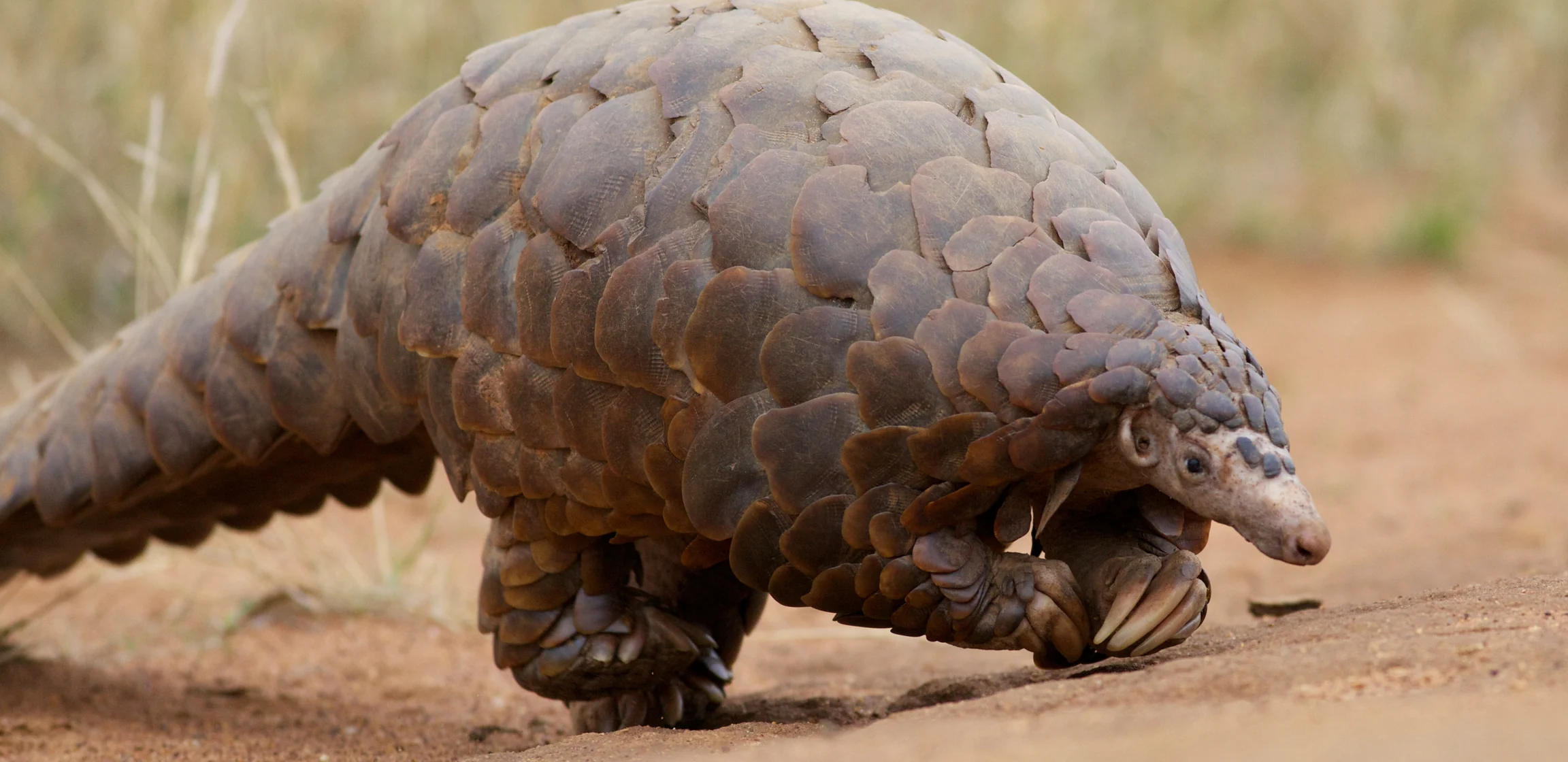
The species associated with a South African safari is Temminck's ground pangolin, Smutsia temminckii. The African Pangolin Working Group describes a terrestrial animal found across a broad part of southern and eastern Africa, favouring habitats including savannah and woodland. Its activity is often nocturnal, although this varies with conditions and location. Seeing one by day is possible; treating daylight activity as a reliable travel prediction would be a mistake.
Pangolins are mammals. Their overlapping scales give them an appearance unlike the more familiar safari animals, and a threatened pangolin can curl into a protective ball. They feed on ants and termites rather than the prey pursued by Africa's large carnivores. These simple distinctions help a guest read the animal as a specialist within its habitat, rather than as an oddity to be ticked off between larger sightings.
Sabi Sabi has documented encounters with pangolins in its ranger writing, including a 2023 account by guide Devon Jansen. Such reports establish that these animals have been observed there. They are not a forecast for the week of your holiday, and an old photograph should never be presented as evidence that a particular animal can currently be found.
For planning purposes, the distinction is important. Choose a reserve and lodge you would enjoy even if the pangolin remains unseen. Consider the broader wildlife, the guiding style and the quality of your accommodation. An itinerary sold around a single elusive species places unnecessary pressure on both the experience and the people conducting it. A good safari needs room for uncertainty.
Tell your planning team about the interest before travel, then discuss it with your guide on arrival. Explain whether you are a photographer hoping to observe behaviour, a returning safari traveller interested in less familiar mammals, or a parent encouraging a child's curiosity. These are useful details when matching you to a lodge and deciding whether a private vehicle would suit your party.
Private guiding, where available, offers flexibility in how time is used. It does not create a sighting or give permission to ignore reserve rules. Ask about the activities genuinely offered by the selected lodge and any age or participation requirements. Do not assume that every private reserve has the same evening-drive arrangements, or that a wildlife interest automatically provides access to a research programme.
If a pangolin appears, let the guide decide how the sighting should proceed. Keep a respectful distance, avoid crowding its route and do not ask for it to be moved, handled or encouraged into a more convenient position. Follow the guide's instructions on lighting and photography. The purpose is to observe a wild animal behaving naturally, not to direct a scene.
The African Pangolin Working Group identifies pressures including illegal trade, habitat loss, road deaths and accidental deaths associated with electrified fencing. This is a wider conservation picture than the familiar story of an animal targeted for its scales. The threats vary between regions, and an individual safari sighting cannot tell a visitor how a population is doing.
If you want to contribute beyond your stay, ask for the name of the conservation organisation, the work involved and the route through which a donation reaches it. Research, rehabilitation and release activities are specialist work; a commercial opportunity to touch an animal is not evidence of a conservation benefit. Avoid buying wildlife products and leave the disclosure of sensitive locations to the people responsible for the animals' protection.
A luxury lodge should provide the comfort and continuity that allow you to engage fully with the landscape. Several nights in one place can be a sensible starting point for an interest-led safari, giving you time to get to know a guiding team rather than repeatedly beginning again. Our guide to slower Southern African safaris explores that approach to pacing.
Within Greater Kruger, Sabi Sabi Private Game Reserve is one of the destinations we can discuss in relation to your wider brief. The right choice depends on the party travelling, the accommodation you prefer and the activities available for your dates. A first safari may place equal weight on classic wildlife encounters; a return visit might leave more time for birds, tracks and the quieter details of the bush.
There is considerable pleasure in travelling with a question rather than a demand. An interest in pangolins can lead to better conversations about habitat and conservation even when none is seen. The experience should remain rich enough that an unexpected sighting becomes an addition to an already rewarding safari.
Secrets VIP Luxury Safaris brings 25 years of experience to planning luxury and ultra-luxury journeys in Southern and East Africa. Every trip is arranged through our Safari Director and support team, with personal input from travellers and a 24-hour concierge desk. Discuss your South African safari interests with us so the lodge, guiding arrangements and pace reflect what you most want to understand.
Research checked on 3 November 2026. Primary sources: African Pangolin Working Group: Temminck’s pangolin; African Pangolin Working Group: threats; SANBI: Temminck’s ground pangolin; Sabi Sabi: Devon Jansen’s pangolin account, August 2023. Lodge programmes and activities remain subject to current arrangements; your proposal confirms the details for your journey.