The best time for a luxury African safari depends on where you travel and what you want to experience. A month that suits game viewing in Sabi Sand may produce a different journey in the Okavango Delta or the Serengeti. Begin with your priorities, then choose the lodge and dates together.
For an international journey, we suggest identifying one central aim: extended time with wildlife, seasonal water activities, photography, or following the Great Migration. That decision makes it easier to select a coherent route through South Africa, Botswana, Kenya or Tanzania.
| Destination | Useful seasonal guide | What to confirm |
|---|---|---|
| Sabi Sand and Greater Kruger | Drier winter conditions often improve visibility through the bush; summer brings greener scenery and warmer weather. | Your preferred lodge, tolerance for heat or cold mornings, and photographic interests. |
| Okavango Delta | May to October is a popular dry-season window; the flood can bring water activities during the local dry months. | Actual water levels and the activities available at your particular camp. |
| Maasai Mara | The migratory herds generally reach the Mara between July and October; resident wildlife provides reasons to visit outside that window. | Wildlife priorities, visitor levels and current herd movements. |
| Singita Grumeti, Tanzania | Singita identifies May to July as a typical migration window at Grumeti, while noting that the route varies. | The location of the herds for your dates; a Grumeti stay and a northern Serengeti stay serve different locations. |
At Sabi Sabi, winter generally means thinner vegetation and more concentrated water sources. Early drives can be cool, so the lodge experience includes time outdoors in changing temperatures. Summer offers a greener setting, warmer days and a different visual character. There is a case for either season; the right choice follows your preferences rather than a universal ranking of months.
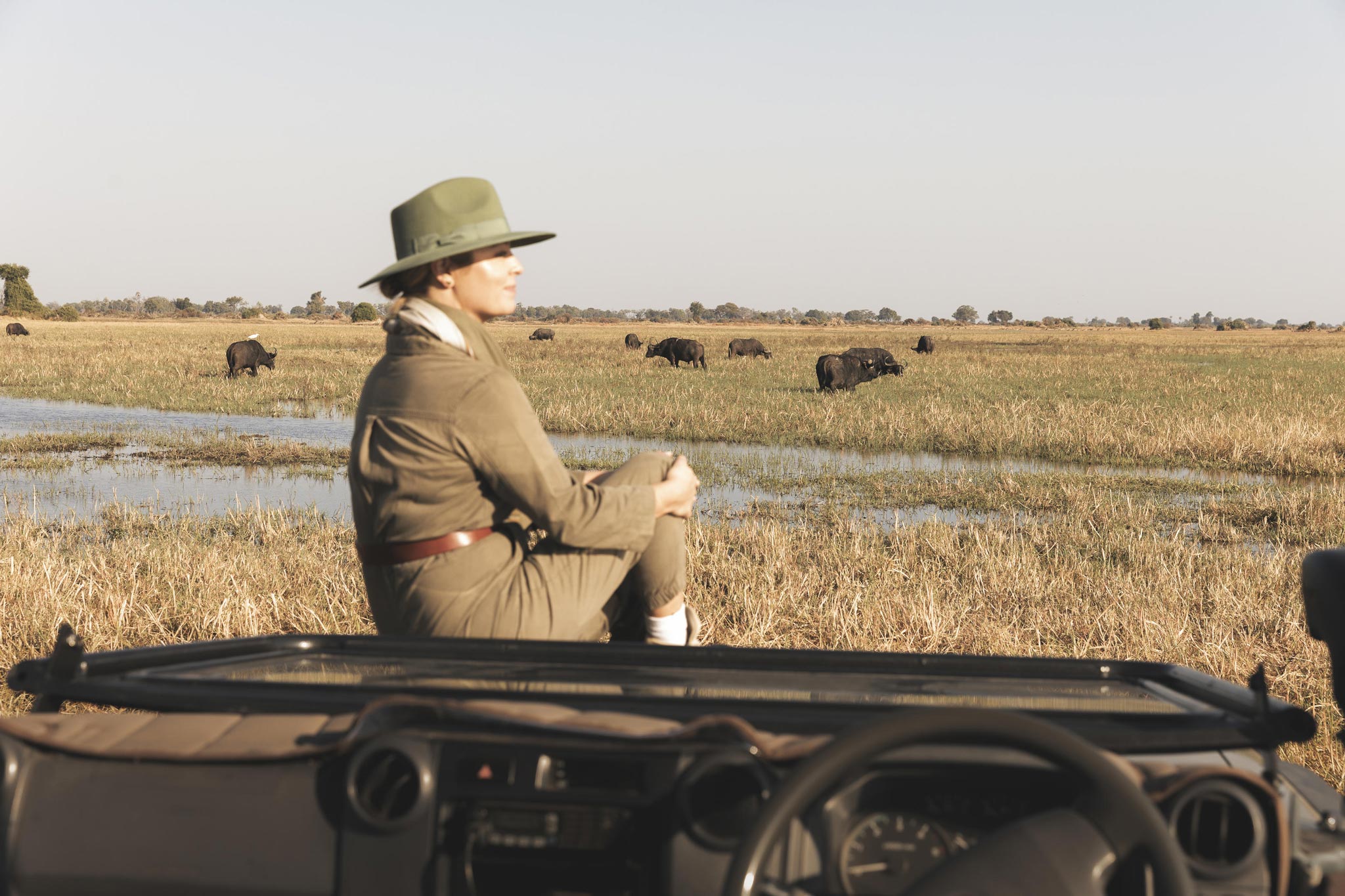
The Okavango receives water from the Angolan highlands as well as local rain. Its flood therefore does not simply follow Botswana’s rainy season. Wilderness describes May to October as a high-season window, with flood levels commonly peaking around June to August, although conditions vary across the Delta and between years. Ask about the camp and dates you are considering, especially if a mokoro or boat excursion is central to your trip.
The Great Migration is a continuing movement through an ecosystem, not an appointment at a river. Angama generally places the Maasai Mara season between July and October and explicitly notes that river crossings cannot be guaranteed. Angama Mara can also form part of a journey focused on resident wildlife rather than a crossing.
For Singita Sasakwa in Grumeti, use Singita’s typical May-to-July guidance as a starting point, then review current conditions. Do not assume that the best dates for the Mara automatically apply to Grumeti. The lodge location matters as much as the month.
Share your date range, number of travellers and two or three priorities with our Safari Director and planning team. We can compare suitable lodges, allow time for connections and explain the trade-offs between a single destination and a multi-country journey. If dates are fixed, we will build around experiences that fit those dates.
Our proposals use published lodge rates and clearly identify any promotional benefits that apply to the journey. Request your safari proposal or review our booking terms and qualifying benefits before confirming your arrangements.
Planning information checked on 3 November 2026. Operator references: Sabi Sabi seasons and weather; Wilderness Okavango seasonality; Angama Great Migration guidance; Singita Sasakwa game drives. Activities, water levels and wildlife movements can change; your proposal confirms the arrangements for your dates.